

Brand Guidelines Design in Hyderabad
12 Essential Elements Every Growing Business Needs
Your company may have a professionally designed logo, attractive business cards and a modern website. But what happens when a new designer creates a brochure, an employee prepares a presentation or a marketing agency develops a social media campaign? Without clear visual rules, each person may interpret the brand differently. This is where Brand Guidelines Design in Hyderabad becomes valuable. A professional brand style guide defines how your business should look and communicate across different materials, helping teams maintain a recognisable identity as the company grows.
At Designers Studio, we develop professional branding and visual communication solutions for startups, manufacturers, retailers, real estate companies, healthcare businesses and service providers across Hyderabad and Telangana.
What Are Brand Guidelines?
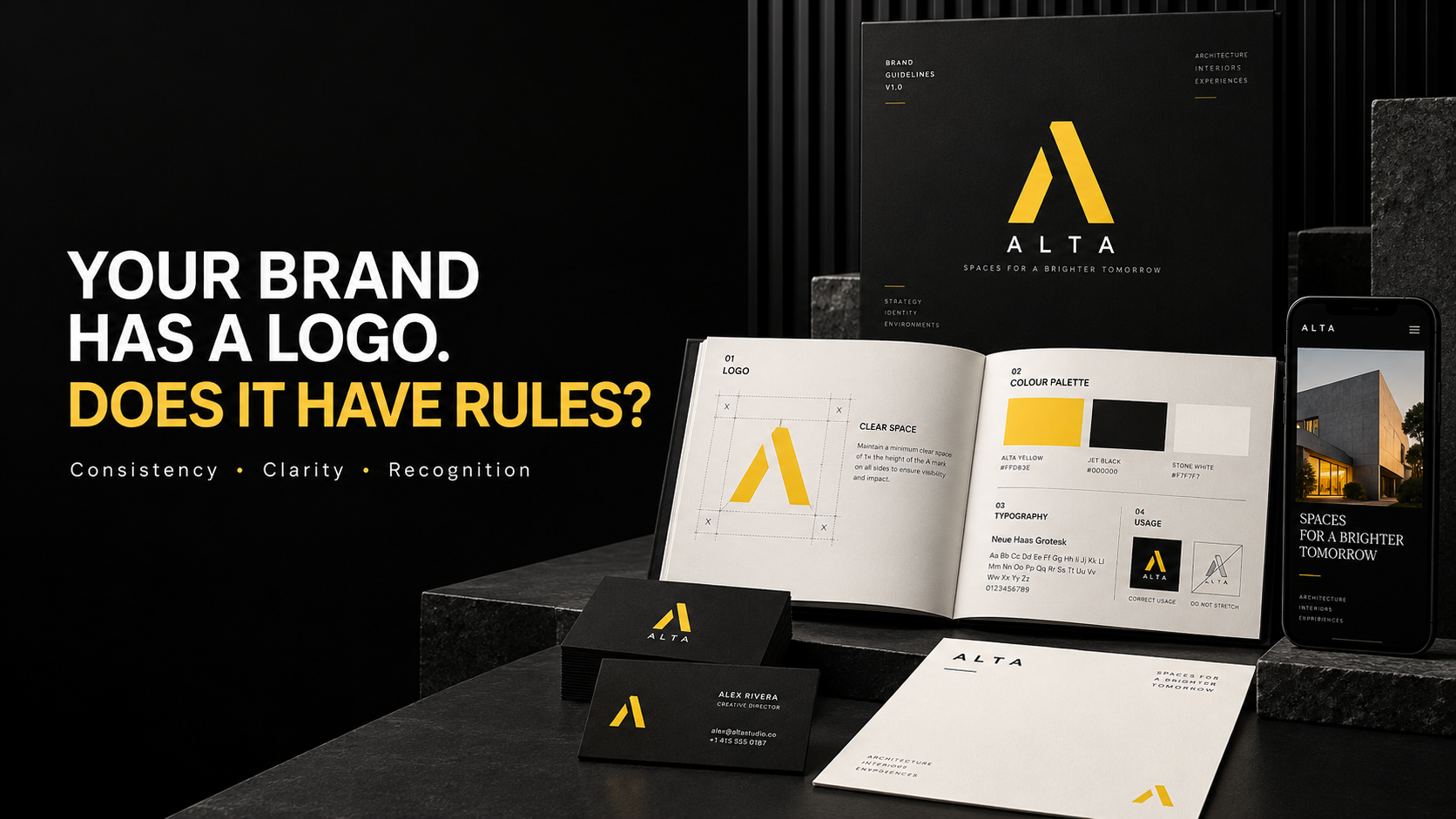
Brand guidelines are a documented set of rules explaining how a company’s visual identity and, where relevant, its messaging should be used.
They provide a reference for employees, designers, printers, website developers, advertising agencies and other partners working with the brand.
A basic guide may include approved logos, colors and fonts. A more comprehensive brand manual can also define photography, illustrations, graphic patterns, messaging principles and examples of real applications.
The purpose is not to restrict creativity. It is to establish a recognisable foundation that allows different people to create consistent materials.
Why Do Growing Businesses Need Brand Guidelines?
As a company grows, more people become involved in its communication. A sales executive may prepare a presentation, a printer may produce packaging and a social media agency may develop advertising creatives.
Without shared standards, the same business may begin appearing differently across these channels.
Colors may change, fonts may become inconsistent and employees may use outdated logo files.
Brand Guidelines Design in Hyderabad helps reduce these problems by giving teams a common reference.
Consistent branding can support recognition, simplify creative approvals and reduce unnecessary redesign work. However, consistency alone does not guarantee sales or customer loyalty. It works alongside product quality, service and customer experience.
1. Brand Overview and Positioning
A professional brand manual should begin with a short introduction to the business.
This may include the brand’s purpose, intended audience, positioning and personality.
For example, a premium interior design company may want its communication to feel refined and architectural, while a children’s learning brand may require a warmer, more playful personality.
These descriptions help future designers understand why the identity looks the way it does.
What to Include
Include a concise company description, target audience, positioning statement and a small set of relevant brand personality attributes.
2. Primary Logo and Approved Artwork
The primary logo is the main version that represents the business.
Brand guidelines should display this logo clearly and identify the approved master artwork.
Teams should not recreate the logo from screenshots, low resolution images or manually typed text.
The guide should also explain which file formats are appropriate for different uses.
What to Include
Show the primary logo, approved artwork references and instructions for accessing the correct logo files.
3. Approved Logo Variations
One logo configuration may not work equally well in every space.
A horizontal logo may suit a website header, while a stacked arrangement may work better on packaging.
A compact symbol or monogram may be appropriate for small digital applications.
Where necessary, the brand manual should define these approved configurations.
It should also identify monochrome and reverse versions for dark and light backgrounds.
4. Logo Clear Space Rules
Clear space is the minimum empty area that should surround the logo.
It prevents nearby text, photographs or graphic elements from crowding the identity.
The clear space measurement can be based on a consistent element within the logo, such as the height of a particular letter or symbol component.
Using a proportional measurement makes the rule easier to apply across different sizes.
5. Minimum Logo Sizes
A logo may look clear on a large sign but become difficult to recognise when reduced.
Brand guidelines can specify recommended minimum sizes for print and digital applications.
These limits should be based on practical testing rather than arbitrary measurements.
If the full logo becomes unreadable at small sizes, the guide may recommend an approved compact configuration.
6. Primary and Secondary Brand Colors
Color is one of the most recognisable parts of a visual identity.
However, a logo’s colors alone may not provide enough flexibility for brochures, websites, packaging and advertisements.
A complete color system can include primary, secondary, accent and neutral colors.
Each color should have a defined role.
Digital specifications may include HEX and RGB values. Print specifications may include CMYK values or relevant spot color references where required.
Color combinations should also be tested for readability and contrast.
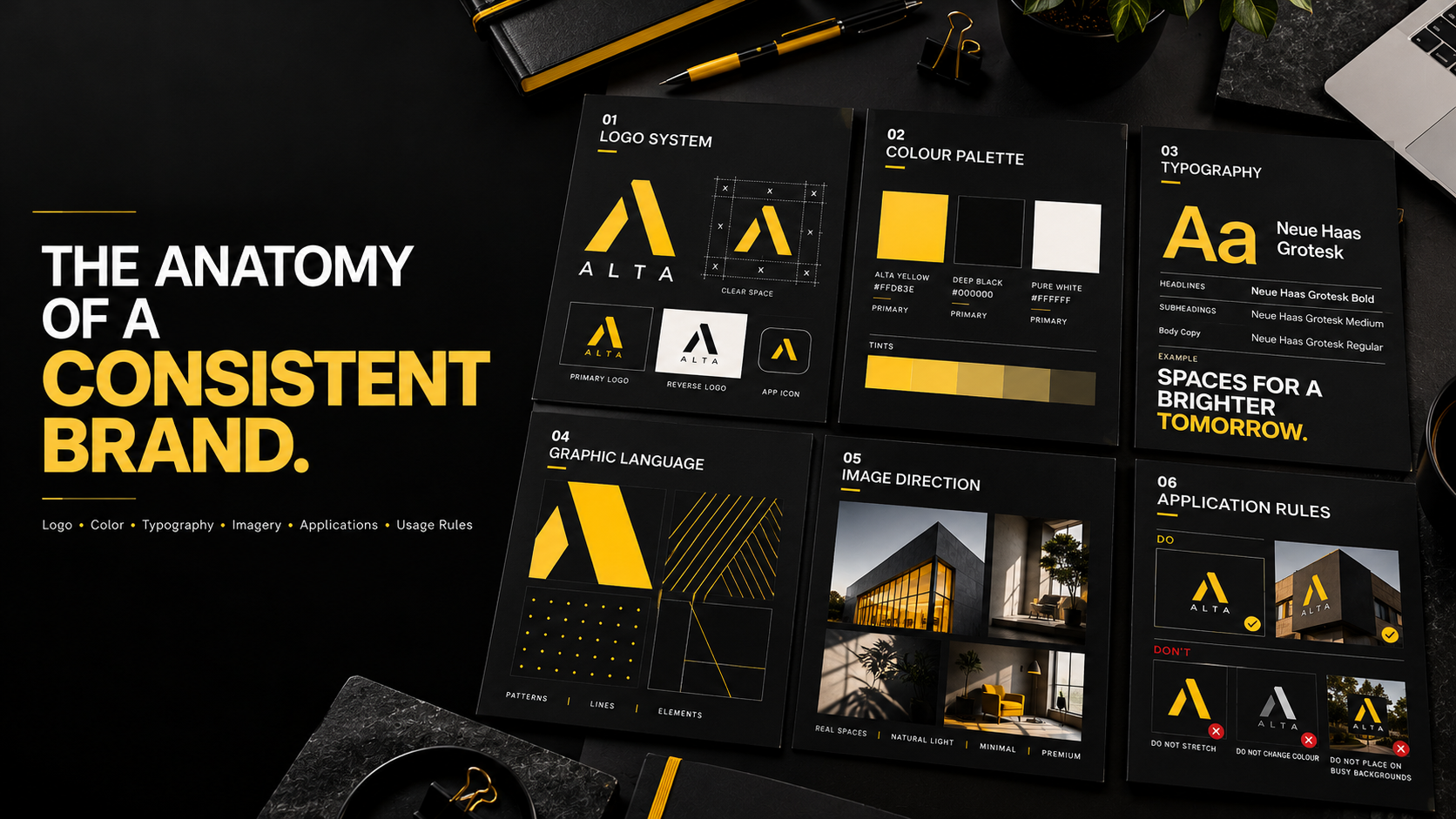
7. Brand Typography System
Typography guidelines define the typefaces used in company communication.
The typography inside the logo may differ from the fonts used for headlines, subheadings and body text.
A professional system establishes hierarchy, recommended weights and basic spacing principles.
It should also consider font licensing and availability across the software used by the business.
For multilingual communication, suitable Telugu and English typefaces may need to be selected and tested separately.
8. Supporting Graphic Elements
Brands can become recognisable through more than their logo.
Supporting elements may include geometric shapes, patterns, icon styles, borders, illustrations or distinctive layout structures.
These elements should complement the identity rather than compete with it.
Guidelines can explain how the graphic elements should be positioned, scaled and combined with text or imagery.
9. Photography and Image Style
Photography plays an important role in how a business communicates its personality.
A premium hospitality brand may use warm, carefully composed lifestyle photography. An industrial company may prefer accurate photographs of facilities, equipment and working environments.
Brand guidelines can define lighting, framing, subject selection, editing style and image quality requirements.
They can also explain when illustrations or diagrams are more appropriate than photographs.
A consistent image direction helps different campaigns feel connected without requiring every photograph to look identical.
10. Brand Voice and Messaging Guidelines
Visual identity and verbal communication should support the same brand personality.
A messaging section can explain how the company should sound in advertising, website content, presentations and customer communication.
It may define tone, terminology, preferred phrases and examples of appropriate messaging.
For businesses communicating in English and Telugu, the guidelines can also establish principles for maintaining meaning and tone across languages.
Messaging guidance should remain practical enough for everyday marketing teams to use.
11. Digital and Print Brand Applications
Brand guidelines become more useful when they demonstrate the identity in realistic situations.
Examples may include business cards, letterheads, brochures, company profiles, social media posts, website screens, presentations, packaging and signage.
Each application can show how approved colors, typography and graphic elements work together.
The objective is not to design every future advertisement in advance.
It is to establish a flexible visual system that future designers can follow.
12. Incorrect Brand Usage Examples
Showing what not to do is an important part of a professional brand manual.
Common incorrect uses include stretching the logo, changing its colors, adding unapproved effects, placing it on low contrast backgrounds and rearranging its elements.
Visual examples are often easier to understand than long written instructions.
Clear restrictions help employees and external suppliers avoid accidental inconsistencies.
Does a Small Business Need a Complete Brand Manual?
Not every small business needs an extensive brand guidelines document immediately.
A startup with limited communication requirements may begin with a concise guide containing approved logo versions, brand colors, typography and essential usage rules.
A business managing several products, locations, departments or external agencies may benefit from more detailed guidelines.
The appropriate scope depends on how many people will use the identity and how many applications need to remain consistent.
The objective is to create a useful document rather than an unnecessarily complicated one.
Brand Guidelines vs Brand Identity: What Is the Difference?
Brand identity is the visual system that represents a business. It can include the logo, colors, typography, graphic elements and imagery.
Brand guidelines document how those elements should be used.
In other words, identity design creates the visual language, while guidelines explain how to apply it consistently.
Businesses can explore the distinction further in our article about logo design versus brand identity in Hyderabad.
Our Brand Guidelines Design Process at Designers Studio
Brand Asset Review
We examine the existing logo, colors, typography and communication materials to understand what is already available.
Visual System Development
Where required, we refine the supporting color, typography and graphic systems so they work consistently.
Application Testing
Relevant digital and physical applications are reviewed to establish practical usage principles.
Guideline Documentation
Approved logo configurations, spacing, colors, typography and other agreed standards are organised into a clear reference document.
Final Handover
The completed guidelines and associated assets are prepared according to the agreed project scope.
Businesses requiring wider support can also explore our graphic designing services in Hyderabad and brochure design and printing services.
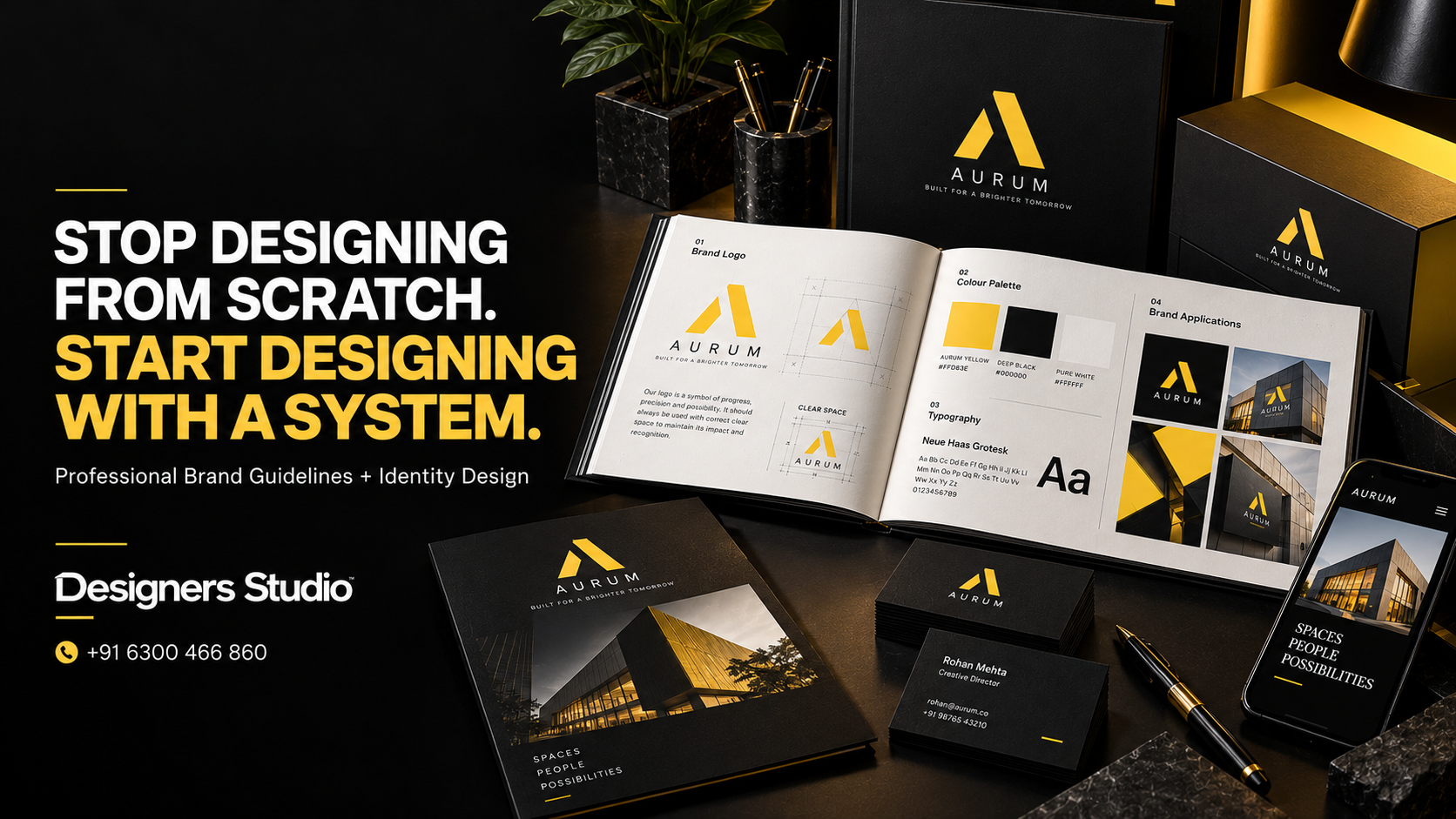
Why Choose Designers Studio for Brand Guidelines Design in Hyderabad?
Designers Studio develops professional visual identities and branding materials for businesses across Hyderabad and Telangana.
Based in LB Nagar, we understand the importance of making branding systems practical for real communication requirements.
Our approach to Brand Guidelines Design in Hyderabad focuses on clarity, consistency, usability and appropriate brand applications.
Whether a business needs a concise visual style guide or a more comprehensive identity manual, the scope should reflect its actual communication requirements.
Frequently Asked Questions
What should professional brand guidelines include?
Professional brand guidelines commonly include approved logos, clear space rules, minimum sizes, brand colors, typography, supporting graphics and examples of correct and incorrect usage. More comprehensive guides may also include imagery and messaging standards.
Can brand guidelines be created for an existing logo?
Yes. An existing logo can often become the foundation for a brand guidelines document, provided its artwork and supporting visual elements are suitable for consistent application.
Are brand guidelines useful for small businesses?
Yes. Even a concise guide can help small businesses maintain consistent logo usage, colors and typography across websites, social media, business cards and promotional materials.
What is the difference between brand guidelines and a brand identity?
Brand identity is the visual system representing the business. Brand guidelines are the documented instructions explaining how that system should be applied consistently.
Does Designers Studio offer brand guidelines design in Hyderabad?
Designers Studio provides branding and visual identity design services for businesses across Hyderabad and Telangana. Businesses can contact the studio to discuss brand guidelines and the appropriate project scope.
Conclusion
A professional brand is not defined by its logo alone. The way that logo, typography, colors, images and supporting graphics appear across different applications contributes to the overall identity.
Brand Guidelines Design in Hyderabad gives businesses a practical reference for maintaining this consistency as more employees, designers and external partners become involved.
From approved logo configurations to typography, imagery and digital applications, clear guidelines help teams create communication that belongs to the same visual system.
Designers Studio supports businesses across Hyderabad and Telangana with professional branding and visual communication solutions designed around practical business requirements.
ONE BRAND. ONE IDENTITY. EVERYWHERE.
Your brand should look consistent whether customers see it on a website, brochure, social media post or packaging.
Choose Designers Studio for professional brand identity and visual guidelines development.
Designers Studio
LB Nagar, Hyderabad
Serving Hyderabad and Telangana
Phone: +91 6300 466 860
Email: info@designersstudio.co.in
