

Waterproof Label Design in Hyderabad
10 Things to Check Before Printing
Imagine a customer purchasing a beautifully packaged shampoo bottle. The label looks premium on the shelf, but after a few days in a wet bathroom, its edges begin lifting and the printed information becomes difficult to read.
The problem may not be the visual design. It could involve the label material, adhesive, printing process or the conditions in which the product is used.
Professional Waterproof Label Design in Hyderabad requires more than attractive typography and colors. Businesses need to consider how the label will perform when exposed to moisture, condensation, handling and other relevant conditions.
Whether you sell cosmetics, beverages, cleaning products or other packaged goods, understanding the relationship between label design and production can help you make better decisions before printing.
In this guide, Designers Studio explains ten important considerations for creating visually effective and practical waterproof product labels.
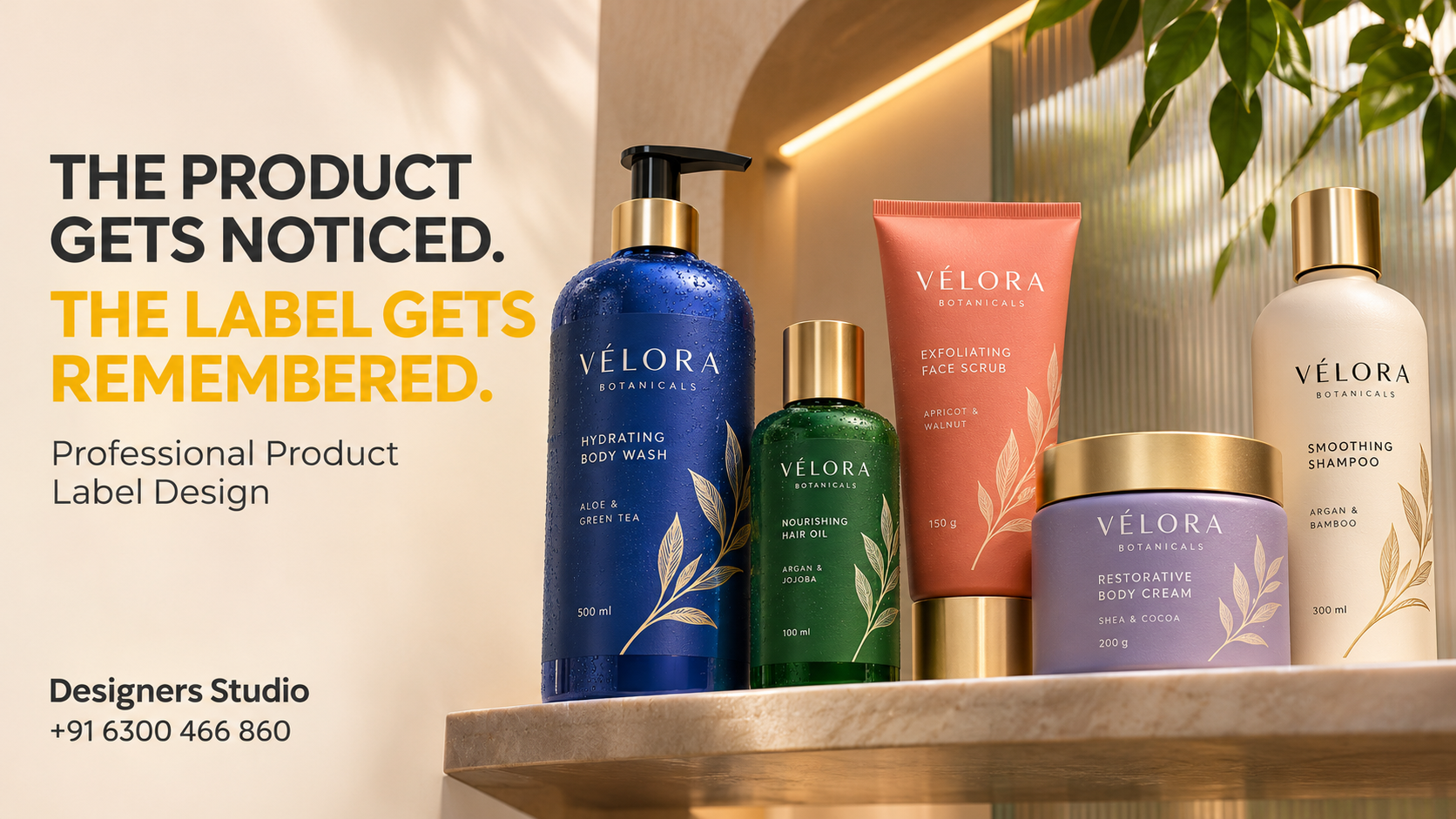
What Is a Waterproof Product Label?
A waterproof product label is intended to maintain its required appearance, attachment and readability under specified water exposure conditions.
However, the word waterproof is sometimes used broadly in marketing. Actual performance depends on the label construction and the conditions it must withstand.
A label suitable for occasional splashes may not remain attached during prolonged immersion.
Similarly, a label that tolerates water may not resist oils, solvents, detergents or high temperatures.
Businesses should therefore describe their actual usage requirements to the label manufacturer instead of relying only on a general waterproof claim.
Waterproof vs Water Resistant Labels: What Is the Difference?
Water resistant labels are generally intended to tolerate a defined level of moisture exposure without unacceptable deterioration.
Waterproof labels are often marketed for more demanding water exposure, but the term does not establish a universal performance standard by itself.
Performance can vary according to substrate, adhesive, ink, protective coating, application method and exposure duration.
For example, a bottle stored in a refrigerator may experience condensation, while a shampoo container may experience repeated wet handling.
These applications can require different label specifications.
When comparing suppliers, ask for material specifications, recommended applications and relevant test information.
1. Understand Where and How the Product Will Be Used
Before choosing a label material, identify the product’s expected environment.
Will the container be stored in a refrigerator? Will it be handled with wet hands? Could it come into contact with cleaning chemicals?
These questions influence the required label construction.
A beverage bottle may experience condensation and chilled storage. A bathroom product may experience frequent splashes. An industrial container may require resistance to specific substances.
Practical Tip
Prepare a short list of expected exposure conditions and share it with the printing or label converting supplier before selecting materials.
2. Choose a Label Material Suitable for Moisture Exposure
Label materials can include paper and several types of synthetic film.
Common synthetic options include polypropylene, polyester and polyethylene, each available in different grades and constructions.
These materials differ in flexibility, durability, appearance and suitability for particular applications.
Ordinary unprotected paper labels may be unsuitable for prolonged moisture exposure.
However, the performance of a finished label cannot be determined from its face material alone.
The adhesive, ink system, protective finish and application conditions must also be considered.
Practical Tip
Ask the supplier to recommend a complete label construction rather than choosing a material solely because it is described as waterproof.
3. Select an Adhesive That Matches the Application
Even when the printed label remains visually intact, adhesive failure can cause the edges to lift or the entire label to detach.
Adhesives are available for different surfaces, temperatures and environmental conditions.
Some applications may require permanent adhesion, while others need labels that can be removed cleanly.
Cold application, condensation, curved surfaces and repeated handling can influence adhesive performance.
Practical Tip
Confirm the container material, application temperature and expected storage conditions with the supplier before approving the adhesive.
4. Check the Container Surface and Shape
A label applied to a smooth glass bottle may behave differently from one applied to a flexible plastic container.
Surface texture, curvature, flexibility and cleanliness can affect adhesion.
Containers that are squeezed repeatedly may require more flexible label constructions.
Tapered bottles can also create alignment challenges when flat artwork is applied around the surface.
Practical Tip
Provide the actual container or an accurate technical specification to the label supplier and designer.
Test the label on the real container before approving a large print quantity.
5. Choose a Suitable Printing Method and Ink System
Water exposure can affect printed graphics depending on the ink system, printing method and protective construction.
Different label production processes may be appropriate for different quantities, materials and finishing requirements.
Digital, flexographic and other printing methods can produce professional results when correctly matched to the application.
However, the printing method alone does not guarantee waterproof performance.
Practical Tip
Ask the printer to confirm the suitability of the complete ink and label system for the intended exposure conditions.
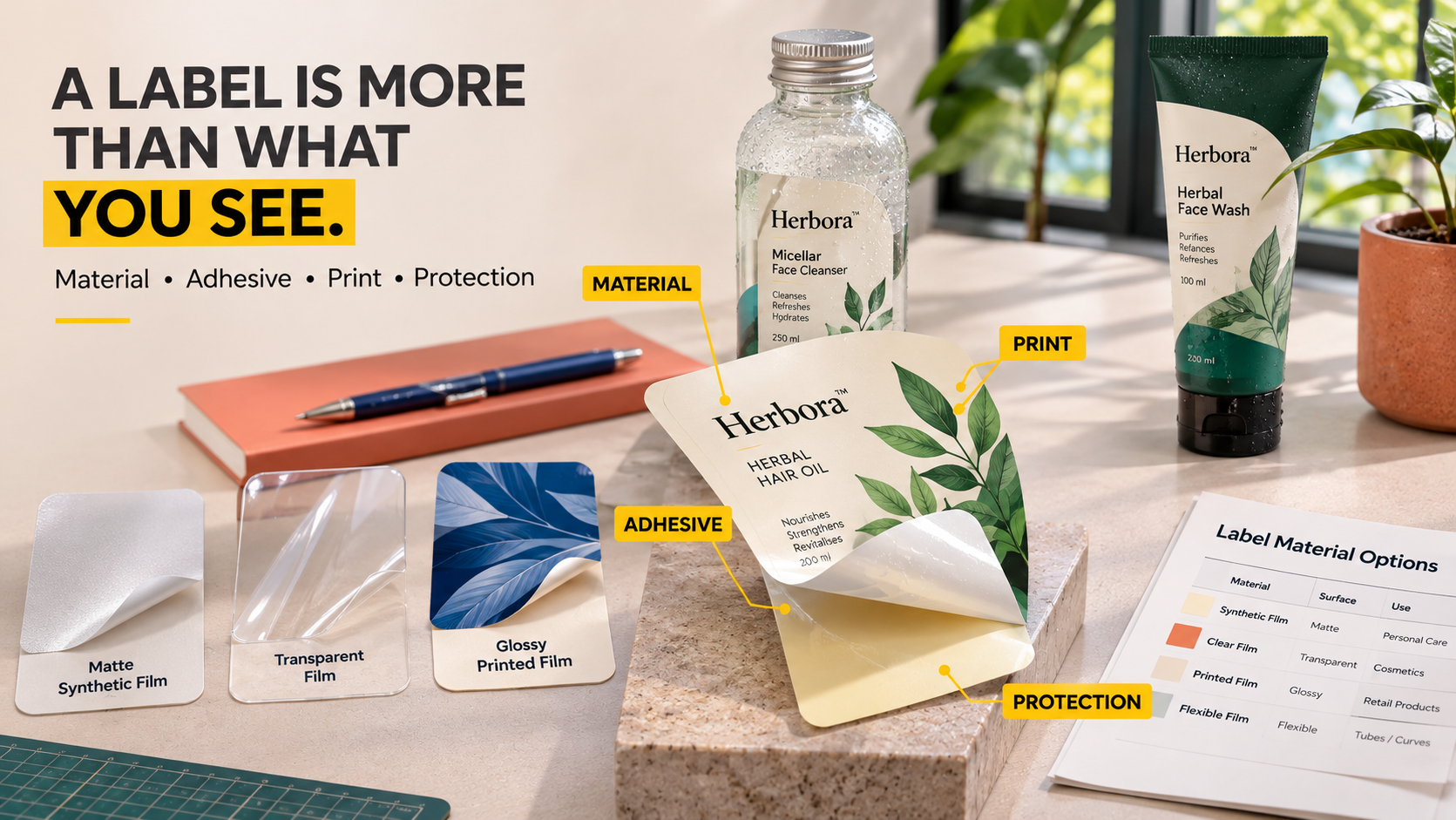
6. Consider Lamination and Protective Finishes
Protective finishes can influence the appearance and durability of printed labels.
Depending on the production method, options may include suitable laminates or protective coatings.
A matte finish can create a restrained visual appearance, while gloss finishes can increase reflectivity and color vibrancy.
However, neither finish should be assumed to provide the required protection without testing.
Finishes may also affect scuff resistance, flexibility, recyclability and overall production cost.
Practical Tip
Review physical samples under realistic lighting and usage conditions before selecting a finish.
7. Maintain Readable Typography and Strong Visual Hierarchy
Label durability is important, but customers must also be able to understand the information printed on the label.
The brand name, product identity, variant and essential information should be arranged clearly.
Very small type, decorative lettering and low contrast color combinations can reduce readability.
On transparent labels, the container contents may influence the apparent contrast of the text.
Designers should also consider whether condensation, reflections or curved surfaces could affect readability.
Practical Tip
Print the design at its actual size and examine it on the intended container. Verify any applicable minimum type size requirements for the product category.
8. Prepare Accurate Label Dimensions and Artwork
Labels must fit the intended application area without interfering with container features, seams, caps or handling.
Artwork preparation may involve accurate dimensions, bleed, safe margins and cutting specifications.
Special shapes can require a custom cutting die or an approved production template.
Text and important graphic elements should not be positioned too close to the cut edge.
Practical Tip
Obtain the final label dimensions and technical artwork requirements from the printer before preparing production files.
9. Include Accurate and Legally Required Product Information
Product labels often communicate information that is required by law or important for safe and informed use.
Depending on the product, relevant details may include ingredients, net quantity, manufacturer information, dates, batch identification, directions, warnings and other declarations.
In India, the requirements vary across food, cosmetics, pharmaceuticals, chemicals and other product categories.
For example, applicable rules may involve legal metrology, food safety, cosmetics or sector specific regulatory requirements.
Designers should work from content approved by the responsible business and regulatory professionals.
Practical Tip
Have all mandatory declarations reviewed by a qualified compliance professional before printing. Visual approval does not establish legal compliance.
10. Test the Finished Label Before Bulk Printing
A digital mockup can demonstrate how a label may look, but it cannot confirm its performance during real use.
Physical testing can help identify problems with adhesion, print durability, surface compatibility and appearance.
Relevant tests may involve condensation, repeated wet handling, temperature exposure or contact with substances expected during use.
The correct testing approach depends on the product and the performance requirements.
Practical Tip
Request production samples and agree on relevant acceptance criteria with the supplier before committing to bulk printing.
Common Materials Used for Product Labels
| Material | General Characteristics | Considerations |
|---|---|---|
| Paper | Wide range of textures and finishes | Moisture performance depends on construction and protection |
| Polypropylene (PP) | Common synthetic film option | Check grade, adhesive, printing and application suitability |
| Polyester (PET) | Often selected for demanding durability requirements | Suitability depends on the complete label construction |
| Polyethylene (PE) | Flexible film options | May be considered for certain squeezable containers |
This comparison is a general design reference. It does not replace technical material specifications or supplier testing.
Which Industries Use Moisture Resistant Product Labels?
Cosmetics and Personal Care
Shampoo bottles, conditioners, body wash containers and other bathroom products may require labels that tolerate repeated moisture exposure.
Beverages
Chilled beverage containers may experience condensation during storage, handling and display.
Food Products
Some refrigerated or chilled packaged foods may require label constructions suited to their storage conditions and applicable food packaging requirements.
Cleaning Products
Containers used around moisture or cleaning substances may require additional consideration of chemical exposure.
Industrial Products
Industrial labels may need to remain legible under specific environmental conditions, including exposure to moisture, abrasion or other substances.
Each application should be assessed individually rather than assuming one waterproof label specification suits every product.
Common Waterproof Label Design Mistakes
One mistake is choosing a label based only on how it looks in a digital mockup.
Another is selecting a face material without checking the adhesive and printing system.
Businesses may also overlook the container’s surface, shape and storage conditions.
Other problems include unreadable typography, unsuitable color contrast, incorrect dimensions and missing product information.
Finally, ordering a large quantity without testing the actual label construction can lead to avoidable production problems.
Final Waterproof Label Artwork Checklist
- Confirm the product and intended usage environment.
- Identify expected moisture and handling conditions.
- Approve the label face material with the supplier.
- Confirm adhesive suitability for the container.
- Check container shape and application dimensions.
- Review printing and protective finishing requirements.
- Verify brand colors and typography.
- Check product information and regulatory declarations.
- Confirm bleed, safe areas and cutting specifications.
- Review the artwork at actual printed size.
- Test physical samples on the intended container.
- Approve the final production proof.
Our Product Label Design Approach at Designers Studio
Understanding the Product
We begin by reviewing the product category, intended audience, brand identity and visual communication requirements.
Label Content Planning
Brand information, product identity, supporting details and approved declarations are organised into a clear layout.
Creative Direction
Typography, colors, imagery and graphic elements are developed to support the brand and product positioning.
Artwork Development
The selected design is adapted to the supplied label dimensions and relevant printer specifications.
Mockup Presentation
Realistic product mockups can help evaluate the visual appearance of the label before production.
Final Artwork Preparation
Approved graphic files are prepared according to the agreed scope and supplier requirements.
Material suitability, adhesive performance, regulatory compliance and physical durability should be confirmed with the appropriate suppliers and specialists.
Businesses can also explore our graphic designing services in Hyderabad and guide to packaging design for small businesses.
Why Choose Designers Studio for Product Label Design in Hyderabad?
Designers Studio provides professional graphic design and branding solutions for businesses across Hyderabad and Telangana.
Established in 2012 and based in LB Nagar, the studio supports businesses with visual identity, packaging graphics and other marketing communication requirements.
Our approach to Waterproof Label Design in Hyderabad focuses on clear visual communication, consistent branding, accurate layout preparation and coordination with the agreed production requirements.
Businesses can contact our team to discuss bottle labels, product stickers and other label graphic design requirements.
Specific materials, printing services and performance guarantees should be confirmed as part of the individual project scope.
Frequently Asked Questions
What is the best material for waterproof product labels?
There is no single best material for every application. Synthetic films such as polypropylene, polyester and polyethylene may be suitable for different uses, depending on the adhesive, printing method and exposure conditions.
Are waterproof labels suitable for shampoo bottles?
Labels can be specified for shampoo and other bathroom products, but the material, adhesive, printing and protective construction should be tested for the intended moisture and handling conditions.
Does lamination make every label waterproof?
No. Lamination may provide useful protection, but finished label performance also depends on the substrate, adhesive, edges, printing system and exposure conditions.
Can waterproof labels be printed in full color?
Yes. Full color graphics can be produced on suitable label materials using compatible printing systems. The final print quality and durability should be confirmed with the supplier.
Does Designers Studio provide product label design in Hyderabad?
Designers Studio provides professional graphic design and branding services in Hyderabad. Businesses can contact the studio to discuss product label artwork and confirm the available design and printing scope.
Conclusion
A product label should maintain a professional appearance while communicating the information customers need.
When moisture exposure is expected, businesses should consider the complete label construction rather than focusing only on the graphic design.
Material selection, adhesive compatibility, printing, protective finishes, accurate dimensions and physical testing all contribute to the final result.
Understanding Waterproof Label Design in Hyderabad helps businesses prepare more effectively before approving product label production.
Designers Studio supports businesses across Hyderabad and Telangana with professional graphic design and branding solutions tailored to their communication requirements.
YOUR PRODUCT LABEL SHOULD LOOK GOOD AND WORK HARD.
Discuss professional label artwork that communicates your brand clearly and suits your product presentation requirements.
Designers Studio
LB Nagar, Hyderabad
Phone: +91 6300 466 860
Email: info@designersstudio.co.in
